
Salesforce Certified Platform Strategy Designer practice exam

Try 5 Platform Strategy Designer practice questions with the answer, a plain-language explanation, and a link to the official source for each one.

Try the sample questionsJoin the beta free

Free during the beta: practice this exam and 20 others for 60 days.

The real exam: 60 questions, 105 minutes, 70% to pass. Official exam guide

Try 5 sample questions

These 5 questions cover 4 of the exam's topics. Pick an answer and check it, the way you would inside TrailScout.

  1. Question 1 of 5

    Value Design

    Leadership sets a goal to double the daily time users spend in a teen-focused app within three months. The strategy designer believes any design that hits this target would likely encourage compulsive use. What should the designer do?

    Show the answer and explanation

    Correct answer: B. Object to the time-spent target and ask leadership to set a different goal

    SMARTE stands for Specific, Measurable, Achievable, Relevant, Time-bound, and Ethical. Everyone shares the responsibility to object to a goal so aggressive that any design solution achieving it would likely cause harm, and strategy designers can push back on goals even though business leaders set them. Adding usage reminders to the designs is the near miss: it responds to the harm, but any design that reaches the target would still likely cause it, so the goal itself has to change.

    Read from the source: Define Success
  2. Question 2 of 5

    Intangible Deliverables

    Stakeholders are asked to grade each of four concepts from 1 to 5 against specific criteria drawn from the project's jobs to be done, then compare the totals. Which decision method is this?

    Show the answer and explanation

    Correct answer: D. Criteria scorecard

    A criteria scorecard lists specific criteria, which can come from the project's jobs to be done, and stakeholders grade each option on a 1-5 scale, then compare totals and individual grades. The decision checklist is the near miss: it also lists criteria, but stakeholders answer yes or no instead of grading.

    Read from the source: Make Decisions and Resolve Conflicts
  3. Question 3 of 5

    Tools and Artifacts

    A team spent three weeks on Concept A. Its comparison chart now shows Concept B serves user needs better at lower investment, but testers rated A's reminder feature the most useful part of either concept. What should the team do?

    Show the answer and explanation

    Correct answer: B. Fold A's reminder feature into B and retire A as a separate concept

    Teams cycle through visualizing, analyzing, and critiquing concepts until they build confidence or eliminate them. A concept can be dropped because stronger alternatives exist, or because combining the best parts of concepts creates a better one. Eliminating a concept after investing time takes courage, but it frees the team for more promising work. Retiring A and taking B forward unchanged is the near miss: B is the stronger concept, but that choice leaves out the feature testers valued most.

    Read from the source: Analyze and Narrow Solution Concepts
  4. Question 4 of 5

    Leveraging Adjacent Roles/Skills

    While refining three concepts, a strategy designer needs to know whether each could strengthen business outcomes and whether each is technically possible. Whom should the designer consult on each question?

    Show the answer and explanation

    Correct answer: A. Business analysts on viability, and developers or architects on technical feasibility

    Concepts are analyzed for desirability (valuable to users), viability (valuable to the business), and feasibility (technically possible). Business analysts help strengthen viability, and developers or architects judge feasibility. Asking customers about viability is the near miss: customers inform desirability, not business viability.

    Read from the source: Analyze and Narrow Solution Concepts
  5. Question 5 of 5

    Tools and Artifacts

    A solar equipment maker sells through independent installers. It wants installers to work deals together with its sales team and receive training materials when they join. Which Experience Cloud use fits this need?

    Show the answer and explanation

    Correct answer: A. A partner relationship management site for channel deals and partner onboarding

    Experience Cloud supports customer service and account portals for self-service, and partner relationship management and channel sales sites for collaborating with partners on deals and onboarding them with content and training. The customer service portal is the near miss because it also shares knowledge, but its audience and purpose are customers solving their own issues.

    Read from the source: Get Started with Experience Cloud

175 more questions are waiting.

The full Platform Strategy Designer practice exam has 180 questions, study sessions, full-length exam simulations, and a Detour Deck that collects the questions you miss.

One free beta pass covers this exam and 20 others for 60 days.

Join the beta free today

Practice, review, and know what to study next.

  1. 1

    Answer first

    Choose an answer, then compare it with the explanation and official source.

  2. 2

    Read from the source

    Every explanation links to the official documentation it is based on.

  3. 3

    Focus where you missed

    Your results show accuracy by topic, and missed questions go to your Detour Deck.

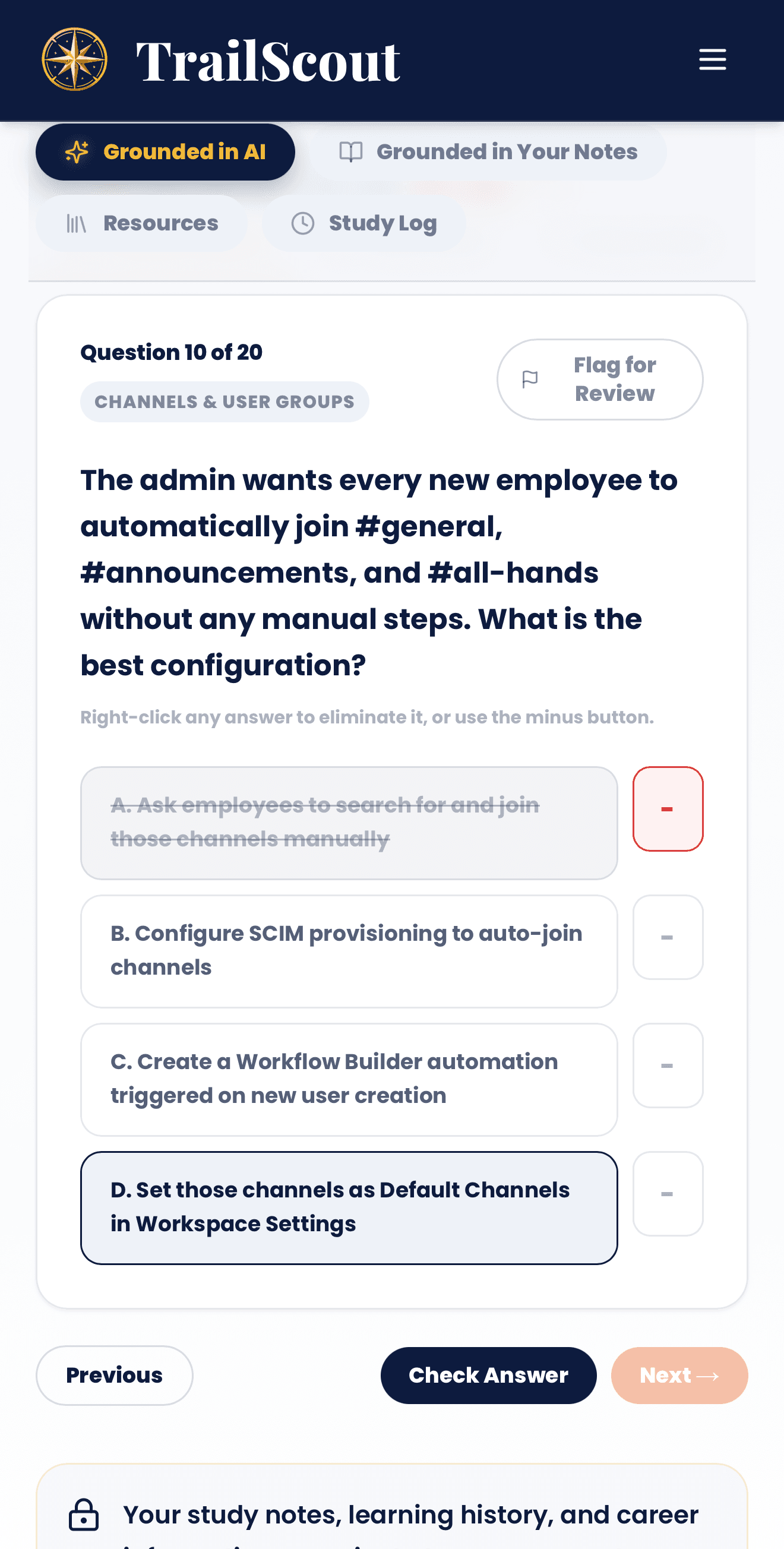
TrailScout practice question with one answer ruled out
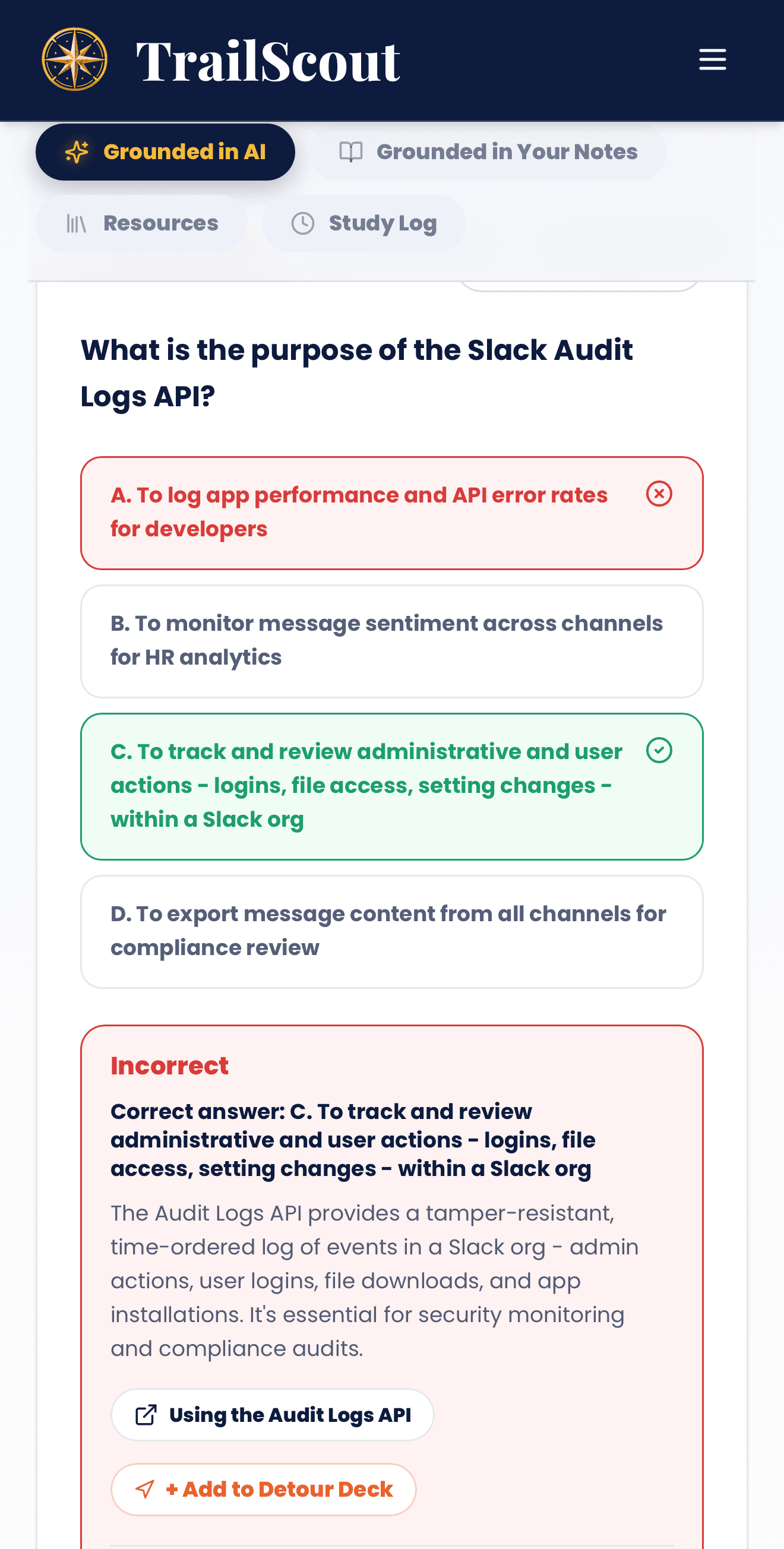
TrailScout explanation card with the official source and a Detour Deck button
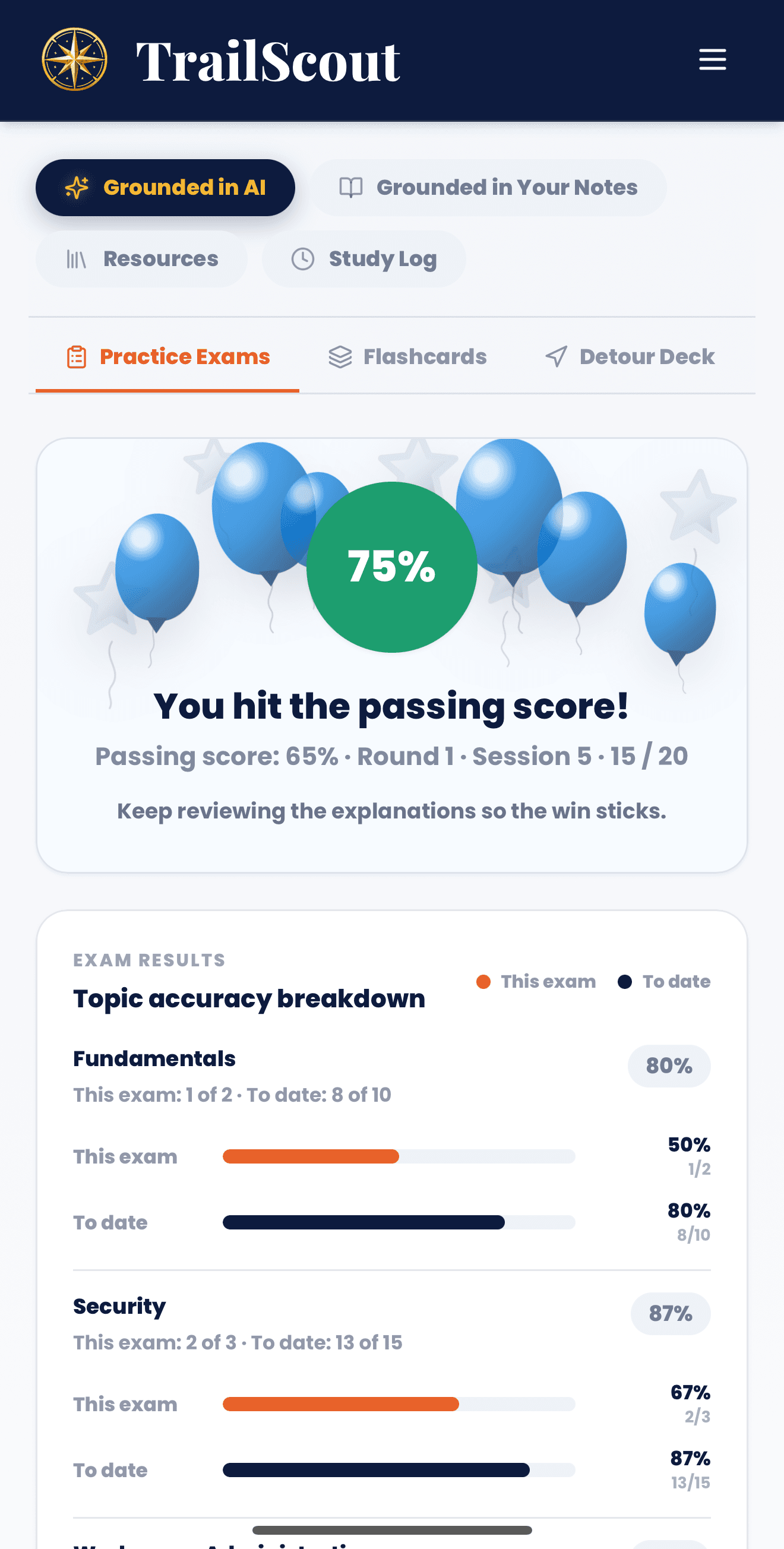
TrailScout session result showing 75 percent and accuracy by topic
1. AnswerRule out choices, then pick your answer.2. ReviewRead why, with the official source one tap away.3. FocusSee your score by topic and what to study next.

Example screens from the Slack Administrator practice exam.

Platform Strategy Designer exam topics

Topic weights from the official exam guide. TrailScout practice follows the same weights.

  • Value Design32%
  • Intangible Deliverables26%
  • Tools and Artifacts23%
  • Leveraging Adjacent Roles/Skills19%

About the Platform Strategy Designer exam

How many questions are on the Salesforce Certified Platform Strategy Designer exam?
The official exam guide lists 60 multiple-choice questions, and you have 105 minutes to finish.
What score do you need to pass the Platform Strategy Designer exam?
The official exam guide sets the passing score at 70%.
Are these real exam questions?
No. TrailScout writes original practice questions from the official exam guide and official product documentation, and every explanation links to the official page it is based on. They are built to practice the way the exam asks, not to copy it.
What is in the full TrailScout Platform Strategy Designer practice exam?
180 practice questions across the topics in the exam guide, study sessions and full-length exam simulations, an explanation for every choice, source links, and a Detour Deck for the questions you miss.

Ready for the full Platform Strategy Designer practice exam?

Join free during the beta to save your progress, see your score by topic, and keep practicing until exam day.

Join the beta free today

Studying for something else? See every exam TrailScout supports

Salesforce Platform Strategy Designer Practice Exam: Free Sample Questions | TrailScout