
Salesforce Certified Platform Data Architect practice exam

Try 5 Platform Data Architect practice questions with the answer, a plain-language explanation, and a link to the official source for each one.

Try the sample questionsJoin the beta free

Free during the beta: practice this exam and 20 others for 60 days.

The real exam: 60 questions, 105 minutes, 58% to pass. Official exam guide

Try 5 sample questions

One question from each of the most heavily weighted topics. Pick an answer and check it, the way you would inside TrailScout.

  1. Question 1 of 5

    Data Modeling/Database Design

    A custom Shipment object has 19 custom fields marked External ID, 6 other custom fields marked Unique but not External ID, and 4 fields that Salesforce indexes automatically in the background. A migration team wants one more External ID field to hold the record key from a new source system. What should the architect tell the team?

    Show the answer and explanation

    Correct answer: B. It can't be added, because the 19 External ID fields and 6 Unique fields together use all 25 slots

    Custom fields marked Unique count against an object's limit of 25 External ID fields, so the 19 External ID fields and 6 Unique fields already use all 25 and no room is left. Treating Unique fields as a separate allowance is the tempting mistake, but they share the same 25, while the indexes Salesforce adds automatically in the background don't count at all.

    Read from the source: Custom Field Attributes
  2. Question 2 of 5

    Salesforce Data Management

    On Lead, a picklist dependency lets Product Interest decide which Product Detail values are offered. An architect is mapping both lead fields to two new custom opportunity picklists for lead conversion and wants converted opportunities to hold only combinations that the lead rule allows. What should the architect do?

    Show the answer and explanation

    Correct answer: A. Define the same dependency between the two new opportunity fields

    If you create a dependency for lead fields that map to opportunity fields for lead conversion, the page says to create the same dependency on the opportunity. Relying on the mapping is the tempting choice, but dependent and controlling lead fields can be mapped to opportunity fields with different dependency rules, so the lead dependency doesn't come along by itself.

    Read from the source: Dependent Picklist Considerations
  3. Question 3 of 5

    Large Data Volume Considerations

    Last quarter an org moved from Enterprise Edition to Unlimited Edition. It has 200 Salesforce user licenses and uses 8 GB of data storage today, and a migration will add about 20 GB of records. Before the load, the architect must decide whether archiving or purging has to happen first. Which assessment of the org's data storage is right?

    Show the answer and explanation

    Correct answer: A. It fits: roughly 34 GB is allocated, more than the 28 GB needed after the load

    Data storage in Unlimited Edition is the 10 GB base plus incrementally added user storage of 120 MB for each Salesforce user license, so 200 licenses give about 34 GB, enough for the 8 GB in use plus the 20 GB load, and no archiving or purging has to come first. Using 20 MB per license is the most tempting mistake because that was the org's figure under Enterprise Edition, but Unlimited Edition allocates 120 MB per license.

    Read from the source: Data and File Storage Allocations
  4. Question 4 of 5

    Data Migration

    Finance asks that the org's scheduled weekly data export (Setup, then Data Export) preserve each account's roll-up summary total and its formula-based customer tier exactly as they stood on the export date. The admin plans to select Include all data. What will the export files contain for these two fields?

    Show the answer and explanation

    Correct answer: C. Neither field's values appear in the export files

    Formula (derived) and roll-up summary fields are always excluded from the data export service's files, so neither the roll-up totals nor the formula tiers can be preserved this way. Selecting Include all data is the most tempting answer, but that option selects all objects for export at the time it is checked; it does not bring back excluded field types.

    Read from the source: Export Backup Data from Salesforce
  5. Question 5 of 5

    Data Governance

    A wealth management firm has Salesforce Shield, and Field Audit Trail is enabled in its org. A new audit rule requires keeping the change history of eight Opportunity fields for seven years, and none of the eight fields is history-tracked today. Which setup sequence meets the rule?

    Show the answer and explanation

    Correct answer: B. Enable Field History Tracking for Opportunity and the eight fields, then deploy a retention policy through Metadata API

    Field Audit Trail builds on Field History Tracking, so tracking must first be enabled on the object and on the specific fields; only then does a retention policy, defined and deployed with Metadata API, have history to keep. Deploying the policy first is the tempting shortcut, but Field Audit Trail copies history from the object's history list rather than capturing edits on its own.

    Read from the source: Field Audit Trail

175 more questions are waiting.

The full Platform Data Architect practice exam has 180 questions, study sessions, full-length exam simulations, and a Detour Deck that collects the questions you miss.

One free beta pass covers this exam and 20 others for 60 days.

Join the beta free today

Practice, review, and know what to study next.

  1. 1

    Answer first

    Choose an answer, then compare it with the explanation and official source.

  2. 2

    Read from the source

    Every explanation links to the official documentation it is based on.

  3. 3

    Focus where you missed

    Your results show accuracy by topic, and missed questions go to your Detour Deck.

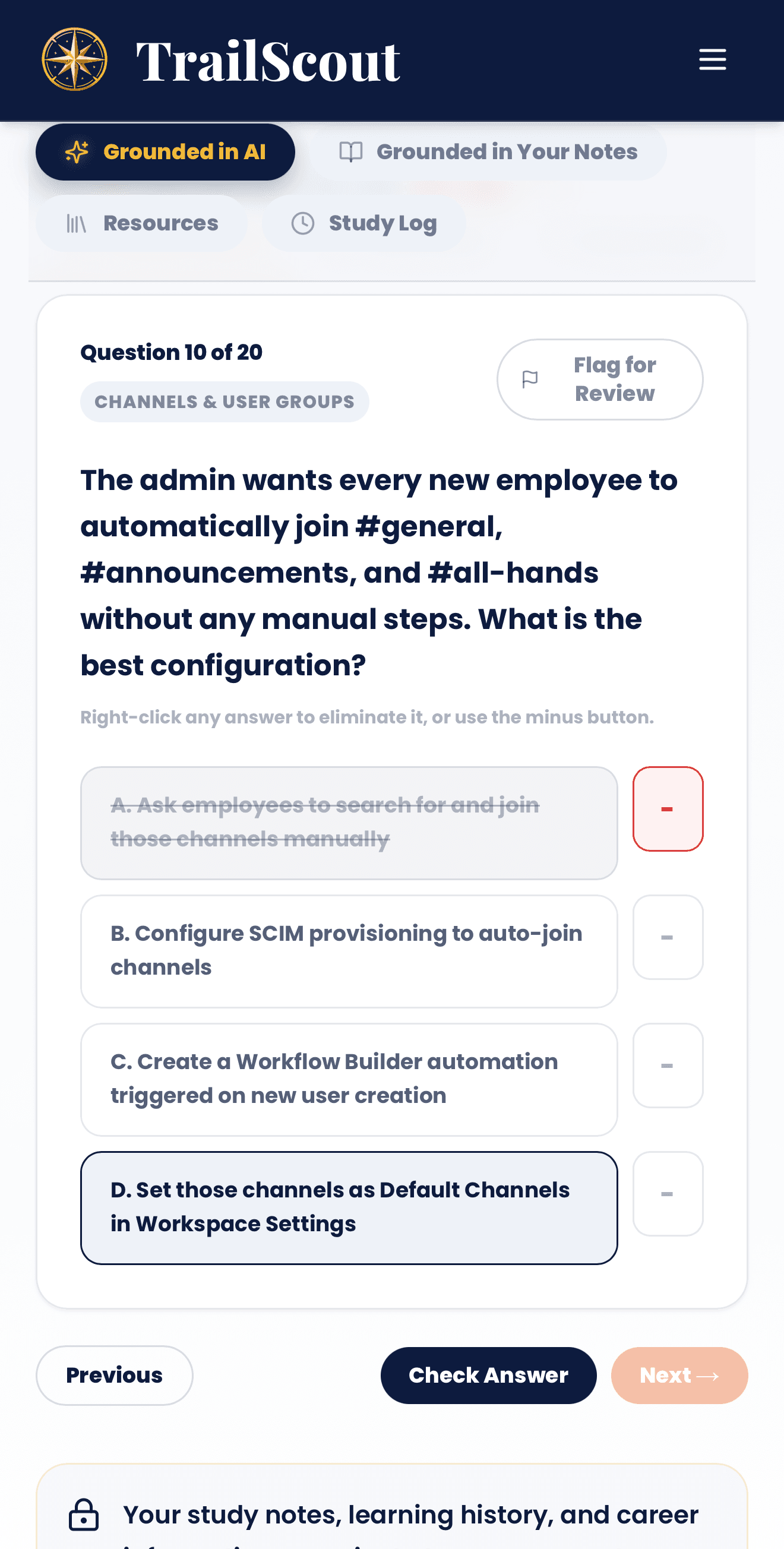
TrailScout practice question with one answer ruled out
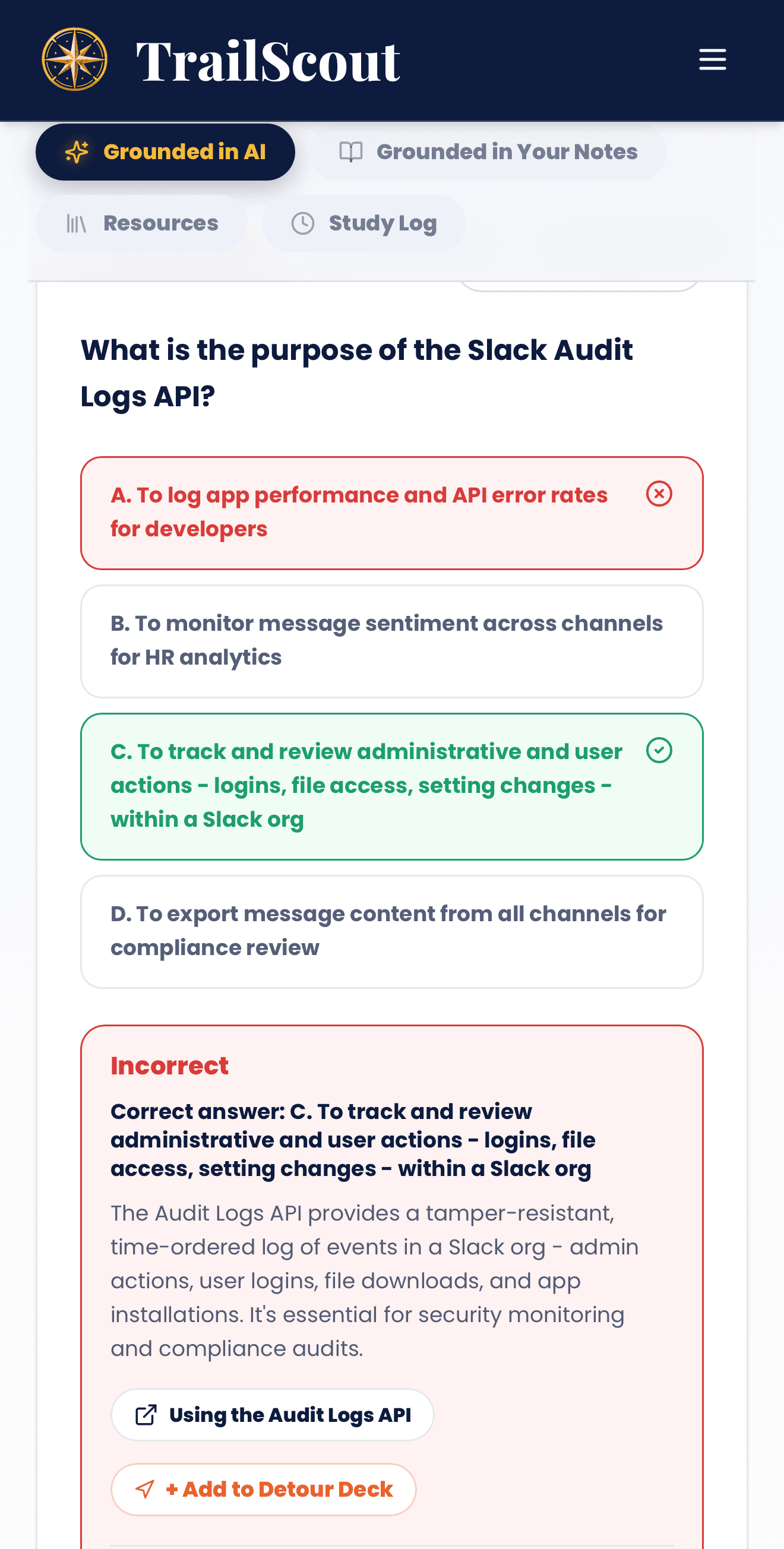
TrailScout explanation card with the official source and a Detour Deck button
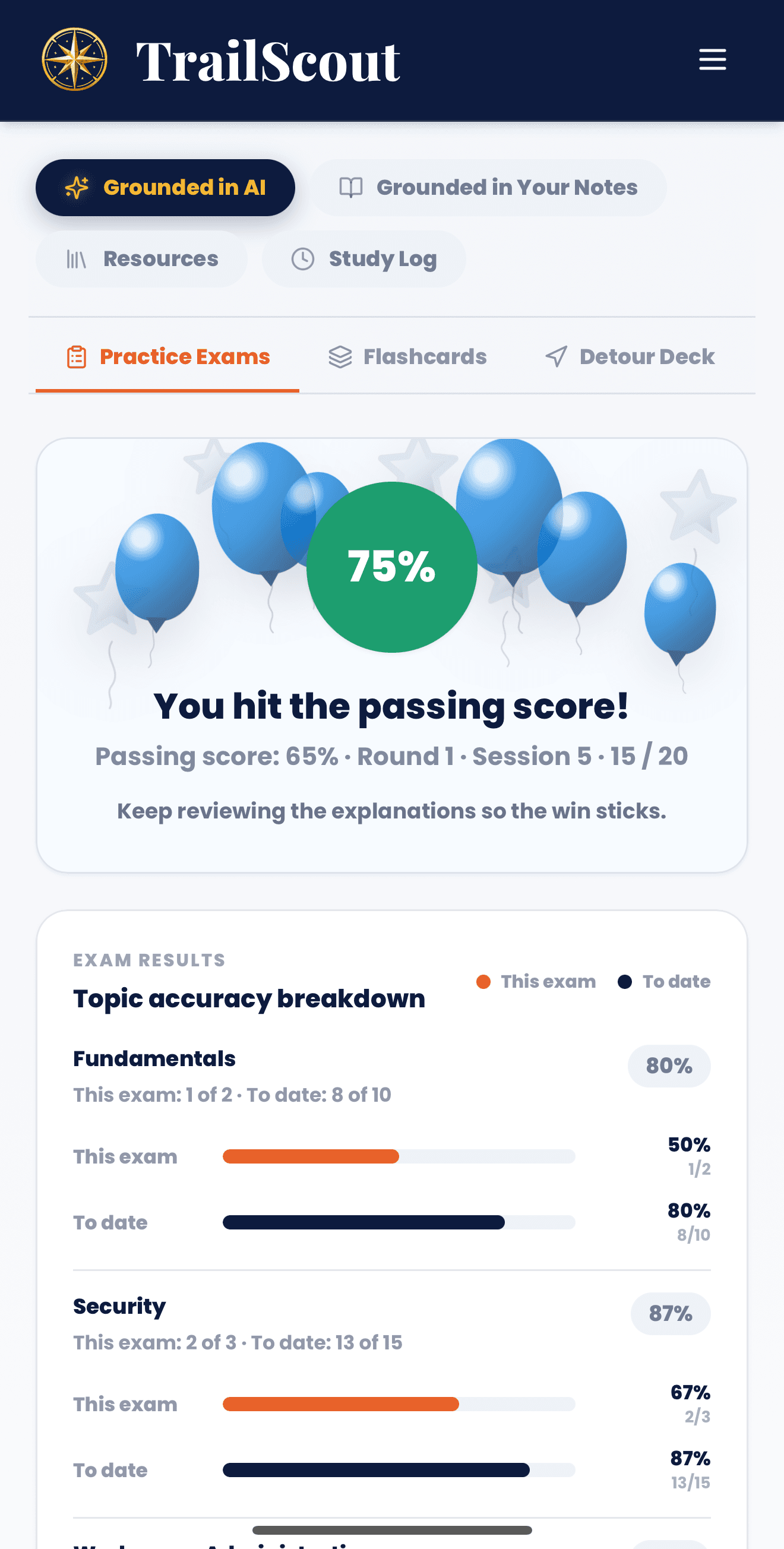
TrailScout session result showing 75 percent and accuracy by topic
1. AnswerRule out choices, then pick your answer.2. ReviewRead why, with the official source one tap away.3. FocusSee your score by topic and what to study next.

Example screens from the Slack Administrator practice exam.

Platform Data Architect exam topics

Topic weights from the official exam guide. TrailScout practice follows the same weights.

  • Data Modeling/Database Design25%
  • Salesforce Data Management25%
  • Large Data Volume Considerations20%
  • Data Migration15%
  • Data Governance10%
  • Master Data Management5%

About the Platform Data Architect exam

How many questions are on the Salesforce Certified Platform Data Architect exam?
The official exam guide lists 60 multiple-choice questions, and you have 105 minutes to finish.
What score do you need to pass the Platform Data Architect exam?
The official exam guide sets the passing score at 58%.
Are these real exam questions?
No. TrailScout writes original practice questions from the official exam guide and official product documentation, and every explanation links to the official page it is based on. They are built to practice the way the exam asks, not to copy it.
What is in the full TrailScout Platform Data Architect practice exam?
180 practice questions across the topics in the exam guide, study sessions and full-length exam simulations, an explanation for every choice, source links, and a Detour Deck for the questions you miss.

Ready for the full Platform Data Architect practice exam?

Join free during the beta to save your progress, see your score by topic, and keep practicing until exam day.

Join the beta free today

Studying for something else? See every exam TrailScout supports

Salesforce Platform Data Architect Practice Exam: Free Sample Questions | TrailScout